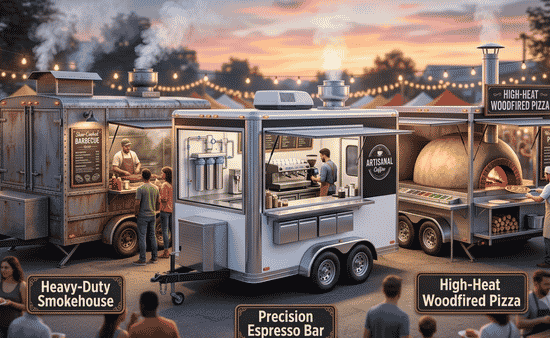
There has been a tremendous change in the world of mobile gastronomy within the past couple of decades. Street food vendors have gone from serving only hot dogs from carts to catering to niche market customers using luxury and high-end vehicles offering dishes equal to any restaurant.
The customers’ demands range from slow-cooked artisanal barbecues to complex espresso extractions, all offered in the confines of a mobile unit. All this has necessitated a revolution in the way mobile architecture is engineered.
Designing a mobile kitchen now requires expertise in mechanical systems, spatial planning, plumbing, electrical engineering, and structural weight distribution. Entrepreneurs planning a specialty trailer often go here to explore custom fabrication options tailored to their cuisine.
The Heavy-Duty Smokehouse Setup
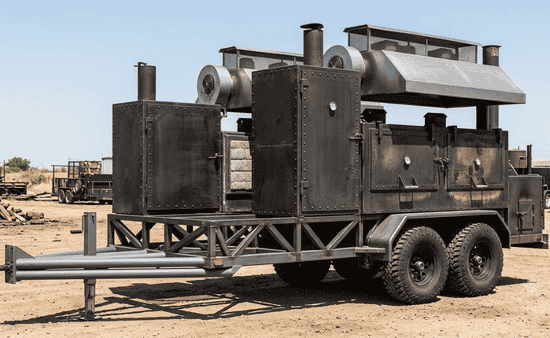
Designing a mobile smokehouse creates immense structural and thermal problems. As opposed to regular models, wood-burning smokers need sturdy steel frames, equating to several tons of static pressure. Integration of the heavy cooking systems demands chassis strengthening, whereby the smoker is installed above or just ahead of the two axles to balance the tongue weight.
In order to ensure that structural issues do not arise, fabricators incorporate custom trusses and heavy-duty steel frameworks as opposed to aluminum ones to distribute the pressure evenly on the suspension. Thermal insulation is equally important; the walls should be lined with high-density ceramic insulation materials with a rating of 2,000°F, along with commercial exhaust hoods and multi-speed spark arrestors.
- Chassis Integration: Reinforced triple-tube tongue and frame rails handle asymmetric, concentrated iron loads.
- Ventilation System: Custom high-velocity upblast fans paired with dual spark-arrestor hoods minimize fire hazards.
- Thermal Shielding: Multi-layered ceramic fiber insulation panels combined with stainless steel air-gap barriers protect integrity.
The Precision Espresso Bar
Switching from thick smoky air to refined liquid extraction, the accuracy-based mobile espresso bar uses refined water chemistry and total electrical stability in place of brute force heat energy. The primary component of an expensive coffee trailer is the water system that needs to be carefully thought through.
The designers need to install multi-stage reverse osmosis water filtration equipment along with large capacity water pumps to keep up bar pressure. Electrical wiring is complicated, as separate clean power cables are needed for the commercial multi-boiler espresso machine, powerful grinder, and under-the-bar refrigerator. The layout is designed to optimize movements, placing steaming, grinding, and tamping areas within 36 inches of the pivot point.
- Hydronic Engineering: Dual redundant demand pumps connected to synchronized sediment, carbon, and water softening matrices.
- Power Architecture: Isolated electrical sub-panels delivering dedicated 50-amp, 240V circuits to eliminate voltage sags.
- Ergonomic Fluidity: Linear workflow geometry with built-in pitcher rinsers and knock-boxes flush-mounted directly into solid surfaces.
The High-Heat Woodfired Pizza Layout
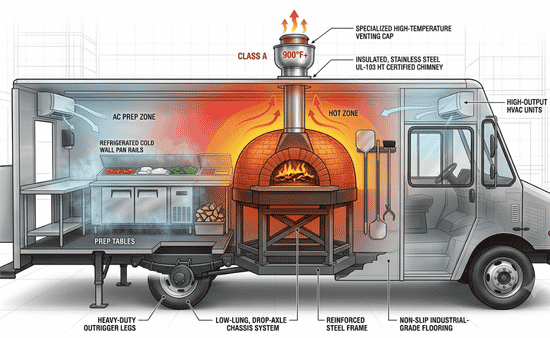
The layout for the high-temperature wood-fired pizza truck is the state-of-the-art in mobile thermal dynamics. At the heart of this system is the refractory stone dome oven weighing up to 3,500 pounds and running at continuously heated interior temperatures over 900°F. Putting such a large thermal mass in a trailer means that the truck must have a low-slung, drop axle chassis system to ensure that the center of gravity remains low to prevent any dangerous swaying while being transported.
The ventilation system requires a direct-venting UL-103 HT certified Class A chimney, a standard designed to safely withstand the high flue temperatures produced by wood-fired ovens. The interior layout will need wide, clear stainless steel prep tables with cold wall pan rails.
- Structural Equilibrium: Drop-spring or torsion axles paired with heavy-duty outriggers stabilize the massive oven dome.
- Exhaust Technology: Direct-vented, UL-103 HT certified chimney systems are specifically designed to safely handle the extreme temperatures generated by wood-fired cooking equipment.
- Microclimate Zoning: Strategic high-output HVAC placement establishes distinct hot zones and air-conditioned prep zones.
Cuisine-Specific Design Requirements
| Food Niche | Venting & Exhaust | Plumbing & Fluid Capacity | Structural Weight Needs |
| Smokehouse | High-velocity spark arrestor | Standard 30-gal fresh / 45-gal waste | Ultra-Heavy Duty (Steel, 7K+ lbs) |
| Espresso Bar | Low-volume steam fans | High-capacity RO filter, dual pumps | Medium Duty (Balanced, 4K lbs) |
| Woodfired Pizza | Class A UL-103 HT chimney | Standard handwash and 3-compartment | Heavy Duty (Drop-axle core) |
| Fry Station | NFPA 96 Hood, Type 1 grease | Standard + integrated grease trap | Medium Duty (Liquid weight) |
The High-Volume Wok Station
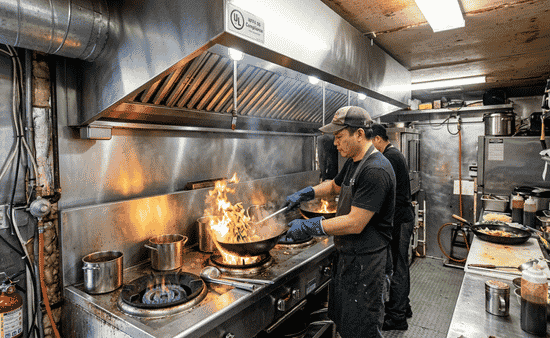
Running a busy wok trailer means that one will be running a commercial-style stir fry environment in a confined area. High-pressure propane burners produce 120,000 BTU’s, producing very hot cooking grease and conditions. This configuration needs a tall stainless steel backsplash to be installed surrounding the whole hot line, with high-temperature insulation backing it up.
The ventilation system should comply with NFPA 96, the industry standard for ventilation control and fire protection in commercial cooking operations, including a Type 1 grease hood with automatic fire suppression.
- Thermal Output: High-pressure LPG regulators feeding cast-iron ring burners.
- Grease Mitigation: Interlocking baffle filters integrated into a seamless hood.
Patisserie Control & Checklist
The patisserie trailer that is built needs total climate control below 68 degrees for the laminated doughs not to melt, using two high BTU air conditioners. To be successful, creators will need to use this rapid design checklist:
- [ ] Weight: Factor in maximum water, fuel, and ingredient weights, not just dry equipment.
- [ ] Utilities: Quantify total concurrent BTU draw and peak electrical amperage demands.
- [ ] Codes: Confirm health department requirements regarding fresh-to-waste water ratios.
Conclusion
The future of mobile kitchen design is found in the convergence of engineering technology and branding through the senses. The custom trailer is transforming into an architecture in itself, one where unique cuisine dictates trailer design instead of restricting today’s culinary designers around the globe. Businesses looking for engineering-focused trailer solutions can go here to learn more about custom builds.